Tag Archives: Gender

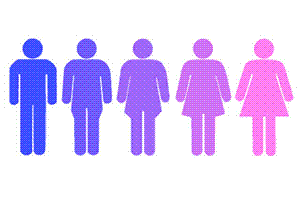
Gender is a spectrum of identity and expression. Posts in this category typically challenge the Western belief of separate binary options.

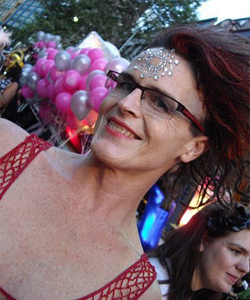
Gay doctor? Why I’m out, loud and proud

IMG_1751

To this day I do not know a single LGBTQ* person from my youth. I was not privileged to have understanding parents nor to have role models with whom I could connect. Many youth today find themselves in a similar position.

Growing up as an LGBTQ* person is rarely easy. Rejection, isolation, discrimination, harassment and physical violence are all too common. Understandably this results in low self-esteem, risky self-destructive behaviors, homelessness and suicide. Hope for a better future is often an essential lifeline to those of us who are hurting. We need to know that suffering will end and that we can be happy.

I choose to be visible for this reason. As many others have said, I want you to know that life does get better. So much better!

If you are struggling please know that you are not alone. You are precious and you are loved. There are many resources available to you. All you need to do is reach out.

  • The Trevor Project (http://www.thetrevorproject.orgis a 24 hour help line that is available to anyone who needs a listening ear.
    • 866-4-U-TREVOR (866-488-7386)
  • Parents, Families and Friends of Lesbians and Gays (http://www.pflag.org) provides support and resources for families and friends of LGBT people.

Ob-Gyns: Prepare to Treat Transgender Patients

Ob-Gyns: Prepare to Treat Transgender Patients
November 21, 2011
From: The American College of Obstetricians and Gynecologists

Washington, DC — To address the significant health care disparities of transgender individuals and to improve their access to care, ob-gyns should prepare to provide routine treatment and screening or refer them to other physicians, according to The American College of Obstetricians and Gynecologists (The College). In a Committee Opinion published today, The College also states its opposition to gender identity discrimination and supports both public and private health insurance coverage for gender identity disorder treatment.

Although the total number of transgender people in the US is unknown, studies suggest they make up a small, though substantial, population. Transgender is a broad umbrella term that includes people whose gender identity and/or gender expression differs from their assigned sex at birth. Female-to-male, male-to-female, crossdressers, bi-gendered, and intersex are the major groups that fall under the term transgender.

“Transgender patients have many of the same health care needs as the rest of our patients,” said Eliza Buyers, MD, former member of The College’s Committee on Health Care for Underserved Women who helped develop the new recommendations. Health outcomes for the transgender community are very poor due to their lack of access to health care, noted Dr. Buyers. “It would be wonderful if all transgender patients had the resources to be seen in a specialized clinic, but the reality is that many forgo care because they don’t. By increasing the number of ob-gyns providing care to transgender patients we can help improve the overall health of the transgender community.”

Transgender individuals who were assigned female sex at birth but are now living as a male will continue needing breast and reproductive organ screening, unless they’ve had mastectomy or had their ovaries, uterus, and/or cervix removed. Male-to-female individuals who have had genital reconstruction may need cancer screening of the neovagina and breast cancer screening if taking estrogen hormones.

“Services that ob-gyns should be able to offer transgender patients include preventive care, Pap tests, sexually transmitted infection (STI) screenings, and hysterectomy for standard indications like heavy bleeding or pain,” said Dr. Buyers. The College recommends ob-gyns first consult with transgender experts before performing hysterectomies as part of gender affirmation surgery. “Hormone replacement can be managed in consultation with experts in transgender care, as many patients will seek hormones on the black market if unable to obtain them from their providers.”

Many, if not most, transgender people face social harassment, discrimination, and rejection from family and society in general. Many of them are homeless, particularly youth who identify as transgender. Transgender individuals are at an increased risk for sexually transmitted infections (STIs), including HIV, and physical abuse.

“We need to make our offices settings that treat all patients with respect,” said Dr. Buyers. The College offers ob-gyns suggestions on how to create an office environment that is welcoming to transgender patients. For instance, asking patients their preferred name and pronoun, posting non-discrimination policies, ensuring confidentiality, and offering sensitivity training for staff are all steps that signal acceptance and let patients know that they will be treated with dignity. “We want the transgender community to know that we, as ob-gyns, care about their health.”

Committee Opinion #512 “Health Care for Transgendered Individuals” is published in the December 2011 issue of Obstetrics & Gynecology.

Israel’s 1st publicized pregnant man

Sarit Rosenblum, y net news, reports that doctors were “shocked” when Yedioth Ahronoth, a 24 year-old man, presented to a central Israel emergency department and was found to be 7 months pregnant. Could this be the same “Y” mentioned in my only published “Dear Dr Pate”? If so, congratulations and good luck to you guys! Thanks for coming forward with your delightful news.

“Two Spirits” Documetary

http://youtu.be/lpKaP6-1Bus

“Two Spirits” is a documentary that uses the tragic story of the 2001 murder of a nádleehí teen, Fred Martinez, to explore the Navajo beliefs concerning gender. In contrast to the rigid binary gender roles perpetuated in Western culture, the Navajo tradition defines 4 gender roles: male, female, male with a feminine essence, and female with a masculine essence. TPT (Twin Cities Public Television) will be airing Lydia Nibley’s documentary, “Two Spirits” on the following dates and times:

  • Sunday, 6/19/11, 10:30pm (channels 2, 440, 802)
  • Monday, 6/20/11, 4:30am (channels 2, 440, 802)
  • Saturday, 6/25/11, 10:00pm (channel 13)
  • Sunday, 6/26/11, 4:00am (channel 13)

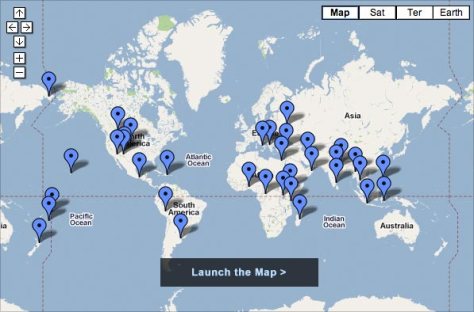
The Navajos are not alone in their recognition of a gender spectrum. Indeed many cultures throughout the world have made place for those of us who do not so neatly fit into one-size-fits-all gender roles. Click here or on the map below to explore them.

Norrie: sex not specified

When a baby is born the first question people usually ask is, “Is it a boy or a girl?” Yet many babies are not so easily classified. Some babies have genitals that have both male and female features. Others may appear to be girls only to discover as teenagers that the reason that they are not menstruating is because the have testicles instead of ovaries. Similarly apparent boys may have ovaries and there are others who have a mixture of both.

Some people’s brains do not match their bodies; there are numerous accounts of children and adults who feel this way. Although the American Psychiatric Association (APA) labels these people with the diagnosis of Gender Identity Disorder (GID), it is the only “mental disorder” that is treated medically (with hormones and surgery) instead of with psychiatric medications. And evidence continues to mount that the brains of these individuals are both structurally and functionally similar to the brains of the gender they claim to be. In Westernized countries we label these people “transsexual” or “transgender”. Other cultures make room for a third sex and use other labels: “Hijra” (India), “Fa’afafine” (Polynesia), “Kathoeys” (Thailand) and “Two-Spirit” (Native American Tribes) are well-known examples.

In the distant past rigid gender roles may have been useful to delineate the expectations and responsibilities of individuals and to maintain order within their collective communities. On the other hand these gendered roles also created power differentials that have been used to disempower, subjugate and abuse women for millenia.

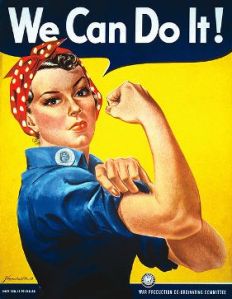
The roles of women in American society have undergone radical changes. During WWII, a shortage of male factory workers gave women an opportunity to leave the home and made Rosie the Riveter a cultural icon. When the men returned from war women were encouraged to return to the home by the promotion of the idealized homemaker exemplified by June Cleaver of the TV show “Leave It to Beaver”. While many women did return home many did not. Given that women continue to make less money than men for similar work and that they remain outnumbered in leadership roles today it is clear that inequality of the sexes is alive and well in modern society.

But what about all the individuals who do not neatly fit into these cultural boxes? A video interview with Norrie of Sidney, Australia by abc NEWS shows that Norrie is one such person who defies definitions and prefers the box “sex not specified”. The interview subtly suggests that if gender is really a continuum then perhaps we should reconsider the purpose that gender identification serves and consider its worth in context of the inequality that it propagates.

DSM-5 pathologizes gender variance

The much anticipated 5th edition of the Diagnostic and Statistical Manual of Mental Disorders (DSM-5) by the renown American Psychiatric Association (APA) continues its misguided tradition of pathologizing gender variance. And they have newly expanded the patient base by including intersex individuals who reject their sex of rearing. Mounting evidence continues to demonstrate that gender is hardwired into our brains at a very early age. Indeed most children know their gender identity by age three and adamantly attest to it; no amount of social pressure, environmental factors or psychiatric persuasion can alter this. For individuals whose bodies do not match their gender identities, the only “cure” (normal variation is not disordered and thus does not necessitate cure) is gender reassignment either by physical presentation alone or aided by hormones and/or surgical modification.

According to the APA, “For a mental or psychiatric condition to be considered a psychiatric disorder, it must either regularly cause subjective distress, or regularly be associated with some generalized impairment in social effectiveness or functioning.” Thus in 1973 the APA concluded that “Clearly homosexuality, per se, does not meet the requirements for a psychiatric disorder since, as noted above, many homosexuals are quite satisfied with their sexual orientation and demonstrate no generalized impairment in social effectiveness or functioning.” It is baffling to me how these same conclusions do not apply to gender variance. Both the homosexual and the gender variant are capable of living full rich lives; only they who deny their inner truth and they who are socially tormented for revealing it are so impaired.

And why include the intersexed? After being surgically modified as infants and subsequently forced into living within the socially imposed system of binary gender roles these individuals are somehow disordered for rejecting this suppression? Apparently the medical community who altered them and inaccurately chose their sex of rearing cannot be at fault. What a travesty it is that the medical community continues to rubber stamp society’s aversion to gender minorities by pronouncing them disordered and thus justifying their mistreatment.

Another pregnant man steps forward

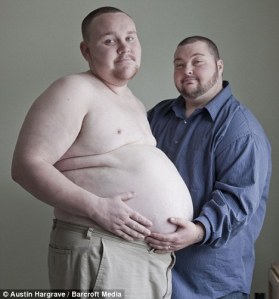
Scott Moore and his husband, Thomas, have decided to follow in the footsteps of Thomas Beatie and Ruben Coronado by going public about Scott’s very much wanted pregnancy and impending delivery in order to raise awareness.

While pregnancy among trans men actually occurs with some frequency it has only recently been brought to public attention. And unfortunately the medical community is often just as startled, befuddled and prejudiced as everyone else.

In the article linked above Scott speaks to the difficulty he had obtaining appropriate prenatal care: “We didn’t want everyone to be shocked when a man turns up to give birth. We found it very difficult to get a doctor and midwife at first. It was hard when people didn’t want to treat me… No pregnant person should be denied healthcare just because they are a man.”

Now granted, a portion of the hesitation Scott encountered in finding a provider was likely related to the lack of established treatment guidelines for pregnant trans men, the inherently increased risks to both father and fetus and the medical-legal liability to be assumed by the would-be provider. Even the standards of care published by the renown World Professional Association for Transgender Health (WPATH) are silent on this issue. But the fact remains that few providers make the effort to educate themselves regarding the medical needs of individuals with atypical gender experience and there has yet to be published even one case report in the Medline (Ovid) primary literature database regarding trans men and pregnancy. Clearly medical providers have a long way to go in meeting the needs of this neglected population.

So what should a trans man considering pregnancy do? First of all, do your research early on and find a provider before you get pregnant. Second, testosterone should be discontinued at least 6 weeks prior to pregnancy in order to prevent its deleterious effects on a potentially female fetus. Elevated levels of androgens like testosterone can masculinize external female genitalia as well as brains with potential social, sexual and gender identity consequences. In the event that an inadvertent pregnancy occurs, testosterone should be discontinued immediately if termination is not desired.

National Drag History Month

January 2010 is the second annual National Drag History Month. In tribute I’ve put together some of my favorite drag videos and movie trailers. Enjoy!

MUSIC VIDEOS

Christina Aguilera – Beautiful (2002)

Jonny McGovern – Somethin For The Fellas (2006)
WARNING: strong language and sexually suggestive content

RuPaul – Cover Girl (2009)

MOVIES

The Adventures of Priscilla, Queen of the Desert (1994)

To Wong Foo, Thanks for Everything! Julie Newmar (1995)

Hedwig and the Angry Inch (2001)

Girls will be Girls (2003)

Kinky Boots (2005)

More Drag History Month videos from Logo.

For some teens, puberty brings unexpected changes

recent article published on CNN discusses the lives of two teens in Palestine raised as girls but transformed by puberty into boys. These teens most likely have a condition called 5-alpha-reductase deficiency (5-ARD), one of several intersex conditions (disorders of sex development) that alters the masculinization of XY fetuses before they are born. Unfortunately, the article uses outdated words and phrases such as “pseudohermaphrodism” and “sex-change operations” that should no longer be used because they are offensive. However it does raise awareness and give face to a group of people who are usually hidden away.

All fetuses have the same internal and external genitalia until about 8 weeks of gestation. Then various hormones act to differentiate the sexes by developing some parts and regressing others. But there are many steps involved and DNA mutations can modify this outcome. I suspect that Caster Semenya, the recently contested 2009 gold medal winner of the 800 meter race at the World Athletics Championships, has androgen insensitivity syndrome (AIS). If this is so, her XY chromosomes and testes were unable to masculinize her body as it formed; a defective hormone receptor prevents her body from responding appropriately to the male hormones it produces. However, her receptors may be only partially impaired and thus give her, in some people’s view, an unfair advantage over her competitors. The allegations, the subsequent gender verification studies and the fallout therefrom continue to embroil her in international controversy. But what makes a woman a woman? If she isn’t a woman than what is she? She certainly isn’t a man.

The Palestinian teens discussed in the article have a different mutation. Like Caster, they probably have XY chromosomes, testes and appeared just like any other girl when they were born. Yet while their hormone receptors work, they lack the enzyme needed to convert testosterone into its more powerful form, dihydrotestosterone (DHT). Their bodies appeared female before puberty because the amount of testosterone produced was insufficient to make up for the absent DHT. After puberty began their testosterone levels went through the roof just like every other adolescent boy. This brought along the changes the go with it including facial hair, deeping voice and musculoskeletal changes. Their clitorises probably enlarged significantly just as penises do. But do these teens really feel that they are now men or do they still feel that they girls inside of bodies that have betrayed them?

“Only my appearance, my haircut and clothing, makes me look like a boy,” Ahmed says, gesturing with his hands across his face. “Inside, I am like a female. I am a girl.”

Why do we care if Caster and these teens are men or women, one or the other? Is it right for society to force them to change to uphold the myth of binary gender? When you really think about it, no one fits the stereotype completely; no one is or every was the ideal man or the ideal woman. They are only fantasies. Instead we are all composites, not one of us pure in form. We exist somewhere in the middle leaning this way and that in varying degrees depending on which attribute we consider. Gender is so much more than the 2 little check boxes “male” and “female.” Maybe someday we will learn to allow each other the space to simply be who we are. A world without labels and boxes, without simplification and alteration. We will finally see the world as it already is.